Examination of the criticism aimed at Shankaracharya’s doctrine of Advaita Vedanta

This is an essay I wrote a few months ago for a program about Indian Philosophy.
I hope it prompts reflection and, hopefully, contributes to the ongoing dialogue about these fascinating approaches to the fabric of reality:
The following analysis aims to evaluate the criticisms levelled against the philosophy of Advaita Vedanta.
For this purpose, we will begin by summarising the main theoretical elements of Shankaracharya’s doctrine, which will be followed by an exposition of the core objections raised by the other Vedanta schools. Finally, we will provide our own opinion on the strength or otherwise of these criticisms.
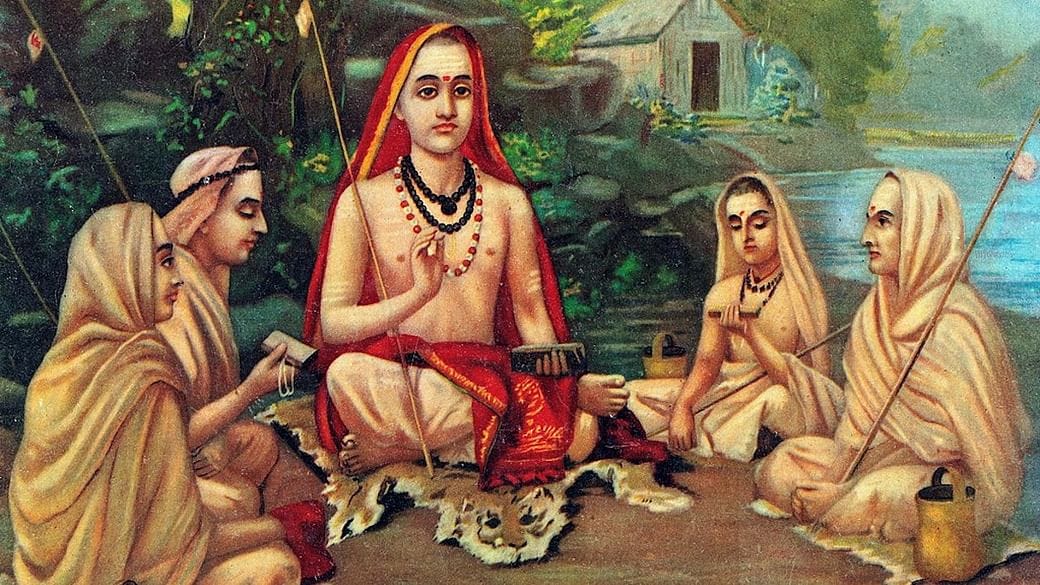
As its name unequivocally indicates, Advaita represents a monist system of thought within the religious corpus of Vedanta.
According to its metaphysical proposal, derived from the interpretation of what is considered to be the supreme method of knowing or pramana, that is, the shruti —the Vedas or sacred texts— there is only a single entity or reality in existence, known as Brahman.
This Brahman, or Absolute Being, could therefore be understood as the essential ontological substratum of reality.
So if reality is non-dual, how is it that we perceive unity as an almost infinite multiplicity?
To resolve this paradox, Shankara bases his approach on the Vivartavada, which states that the physical domain we interact with is just an appearance (mithya).
The fact that we don’t realise the world we perceive is actually non-real is primarily due to ignorance of the true reality, the all-embracing Brahman. However, this delusive misperception or avidya is also rooted in our intrinsic limitations, both sensory and cognitive.
A priori, this apparent recognition of two realities should imply a bipartite ontology. Nonetheless, Shankara’s monistic Advaita is intrinsically incompatible with that reasoning; thus he adopts a Buddhist theory to avoid any hint of duality —probably inspired by Gaudapada’s precedent—.
Regarding this teaching, there are different levels of reality. At one level, the world we live in is governed by Ishvara, a personal deity. Yet as we encounter the highest level of absolute reality, we discover that our empirical realm reveals itself as an illusion, maya, an illusory fabric nourished by the influence of avidya.
Consequently, it can be asserted that the appearance of reality vanishes as soon as the subject is freed from ignorance. So the question is: how do we awaken to the truth of Brahman?
In order to explain this, it is imperative to return to Advaita’s account of perception.
For Shankara, everything we presume to be aware of is just an image, a mental construction created by the combined processing of the senses, mind, and intellect.
As a result, the object itself is never experienced, for the sole element accessible to our apprehension is merely a mental projection. This, in fact, is reminiscent of the epistemological dichotomy established by Kant between noumena and phenomena.
From that premise, it becomes evident that reality can only be understood as subjective, for no sensory information will constitute proof of an entity’s objective existence.
Following this epistemological conundrum, one might ask about the way to obtain liberation, which stands in every Vedantic school of thought as the primary aim to pursue.
In Shankara’s view, knowledge of Brahman remains the exclusive cure for ignorance, and therefore it is the single path to withdraw from the cycle of rebirth (samsara) that karma sustains.
Moreover, if knowledge alone is presented as the means to moksha, action is rendered ineffective in this regard. This implies depriving the performance of ritual (karma) or devotion to a personal deity (bhakti) of their transcendent power, thus stripping them of their soteriological significance.
Above all, the paramount truth revealed by the sacred scriptures, especially the Upanishads, attests that the absolute reality beyond this world, Brahman, is identical with the atman or individual self.
This leaves an almost faultless metaphysical scheme that places the soul in its centre, for if the atman is Brahman, every notion of genuine individuality, thus plurality, vanishes.
Since each of us is ultimately the Supreme Being —conforming to “tat tvam asi”, one of the Upanishadic sayings that Shankara relies on to base his cardinal claim— in realising our true essence, we will unlock the key to break the illusion we’re bound by, and hence we’ll finally be able to gain liberation.
In relation to the objections adduced against Advaita, it is possible to distinguish the following:
First, the concept of maya and the subsequent idea of this world’s reality as a form of illusion, when the opposite is plainly clear and self-evident.
Second, the existence of maya within Brahman and the power it exerts upon him.
Third, the inalterable identity of Brahman and his portrayal as the undistinguished oneness, which involves the impossibility of a personal deity as the Absolute Being that rules the world, and also of a separate atman.
Fourth, the absence of a systematic ethical framework in Shankara’s teachings.
Fifth, the nature of avidya. What is it? Is it real? And in that case, how can it exist and affect atman, and therefore Brahman?
With respect to his theory of reality, it can be argued that Shankara’s proposal is suspiciously concordant with that of Nāgārjuna, the Buddhist philosopher. He, in following the teachings of the Buddha, distinguishes between two levels of truth: saṃvṛti (conventional truth) and paramārtha-satya (ultimate truth).
As a matter of fact, Advaita’s maya-vada —which led to its greatest acharya being accused of creating a disguised form of Buddhism— proposes a dualistic model of reality where only one is absolutely real.
Consistent with what we mentioned before, the phenomenal world is simply a limited reality, a mirage that fades away when the realisation of Brahman is reached. Thus, until the subject is awakened to the truth of Brahman and recognises its identity with atman —which, despite appearing as multiple, is indeed one without a second— the experienced physical plane feels and operates as entirely real.
As expected, this conceptual construction becomes the target of incisive criticism by both Ramanuja and Madhva, the acharyas of the schools of Visishtadvaita and Dvaita Vedanta, respectively.
The argumentation of Ramanuja raises crucial questions, such as whether illusion is Brahman or where it arises from within an immutable and indivisible source.
Furthermore, he asks about the existence and nature of that illusion, claiming that if it were identified with Brahman, that would entail exposing the Absolute to its effects, or even accepting its presence within the unalterable fullness of the Supreme Being.
In this sense, Visishtadvaita disputed Shankara by defending the thesis of this world being real, the satyavada.
This idea is supported by the relevance attributed to the pramana of perception, called pratyaksha. According to its premises, if we experience the world as authentic through our senses, that constitutes enough evidence of its realness. So much so that no form of inference can refute the soundness of empirical proof. Moreover, it is considered that any explicit reference to the mayavada theory is founded on the divine knowledge of the Vedic texts.
In the case of Madhvacharya, he shares with Ramanuja his rejection of Shankara’s doctrine of reality, by highlighting the hegemony of perception as a means of demonstrating the unequivocal truth of the world we inhabit, despite its temporariness.
In fact, not only does Madhva assert that nowhere in the scriptures is it declared that the world is not real, but he also states that if any scriptural account is contradicted by direct perception, it is not due to the defectiveness of the latter, for our misinterpretation of the revealed truth would be the cause of such disagreement.
This connects to the argument given by Madhva that categorically denies the equivalence of Brahman to atman, as they’re utterly distinct.
It is, in fact, for this very reason that the atman can fall prey to the illusion that correlates to samsara. How else could the bondage to this world be held to an omnipotent being if not because atman is not Brahman?
As Dvaita’s acharya affirms, the world, created by Vishnu, is actually an act of mercy that grants the possibility of freedom from illusion and of further residing in Vaikuntha, the Almighty’s abode.
Starting from the Upanishadic assertion that Brahman alone exists, we should recall that Shankara invokes the notion of avidya as the cause that precipitates illusion. The question that emerges then, as proposed by Advaita’s opponents and also in conjunction with what was previously exposed, is how ignorance can affect Brahman.
Again, according to Madhva, no illusion, ignorance, rebirth, suffering, or limitation could apply to the Supreme Deity, so neither maya nor avidya has any influence over Brahman.
Actually, in addressing this precise point, Ramanuja differs from Shankara’s stance as to whether existence as the individual atman is a product of delusion.
From his system’s perspective, the world and the personal soul are aspects derived from Brahman, which allows the possibility of their particular existence in spite of being part of the same fundamental.
This theoretical divergence brings us to what may be the major objection shared by both Madhva and Ramanuja against the doctrine of Advaita.
We are referring to the equality proclaimed between the atman and Brahman, for Brahman alone is real.
In this regard, we must emphasise that even though Ramanuja recognizes both the atman and the world as real individual entities, even eternal, he doesn´t adduce their independence from the absolute. For they substantially constitute manifestations of the qualified Brahman, though not itself.
This margin for variety within the essence of the whole —core of the parinama-vada vision, in which Brahman transforms into the material universe and the infinity of souls that exist in it— contrasts with the changeless homogeneity of Brahman that Shankara affirms.
It appears to be evident that the claim of Advaita is even more distant from Madhva’s position, since he radically distinguishes Brahman, as the creator, from the atman —the self or individual soul— and the physical domain. These two entities are, in fact, products of his creative action, that is, a logical reflection of Vishnu’s own nature.
Nonetheless, it needs to be stressed that these ontological differences must not be mistaken for grounds to infer independence among the totality of elements in place.
While Ramanuja argues that atman cannot perform acts or exist independently of Ishvara, the personal Supreme Deity, Madhva takes a step further by asserting that illusion results from misunderstanding one’s complete dependence on Vishnu.
Thus, the conception of oneself as utterly independent is the origin from which suffering and rebirth arise.
Ultimately, in the eyes of Madhvacharya, the Buddhist-inspired monism sustained by Advaita poses, at its core, what could almost be considered offensive, since it regards the sheer identity of atman and Brahman, signifying the non-distinction between the self and Vishnu.
At the bottom of it, the acharya of the dual school of Vedanta preaches the significance of sakshin —an intuitive knowledge through which atman permeates the mind and allows access to the truth— as the ultimate source of pratyaksha, or a form of higher perception.
Such an instrument has the capacity to free us from ignorance by unravelling the fact of our individualism, rather than the universal identity with Brahman that Shankara elaborates on.
This is the reason why not simply Madhva but Ramanuja too deny pure knowledge as the way to acquire moksha.
By virtue of establishing a dichotomy between the independent entities of Brahman and atman, Madhva maintains that bhakti alone, and the grace of God originating from it, are the requisites to achieve liberation, whereas knowledge is essentially a gift of the Supreme Deity, elicited through the practice of devotion.
Ramanuja adheres firmly to this position, for his teachings prescribe the practice of bhakti and the surrender to God as the means to the same end: moksha. Once again, the release in this case would result from the grace of the Deity bestowed upon its worshippers.
Lastly, Shankara is accused of relinquishing a moral ground to guide our conduct because of his rejection of the jñana-karma-samuccaya-vada, which postulates that knowledge alone is not enough to gain spiritual realisation. On the contrary, it is a combination of knowledge —jñana— and right action or ritual —karma— that brings liberation, in accordance with this doctrine.
To our understanding, the refutations presented by Shankara’s adversaries —as summarised above— do have a solid ground but are not exempt from certain weaknesses that should be examined.
We will begin this brief assessment by recognising the Buddhist inspiration that unquestionably characterises Advaita’s ambiguous division between two levels of reality.
In light of what Ramanuja and Madhva objected to in this regard, the principal issue to be approached is how this duality can happen in a singular, undivided reality.
If, as Shankara states, the world we interact with is just partially real, since it disappears the moment we realise our true identity to be Brahman, everything, from the material context and its constituents to karma or rebirth, is plainly a mere illusion.
Still, that deceptive actuality can manifest itself as being entirely real, and so we will experience its effects, karma and rebirth among them.
The question that arises then is: what is the nature of that partition?
If Brahman is ontologically singular, the separation must be necessarily epistemological, which is indeed coherent with the means for liberation that Shankara proposes, that is, “discriminating knowledge”.
Nevertheless, it remains uncertain how a perceptual-cognitive condition can generate an experiential circumstance that transcends subjectivity, becoming supra-individual in its principles.
To put it differently, it could be inferred that Shankara is proposing an empirical reality based on the conditioning that the intellect or buddhi imposes on our consciousness, which could ultimately be identified with atman and, therefore, Brahman.
Thus, our perceptual limitations in conjunction with our inherently flawed cognition would constitute the cause of a “reality” with no ontological status.
Ignorance, and hence a kind of privation —the lack of knowledge— will therefore function as a non-existent foundation for the framework —also devoid of its own ontology— that is paradoxically needed to attain liberation.
For that reason, avidya as a source and maya as its effect could thus be understood as negative entities, an absence.
By this premise, one could argue in favour of their inexistence, while portraying them as no-beings.
But despite this argument being in line with the Parmenidean principle of non-contradiction, how can a non-existing thing occur in the all-existing, all-eternal oneness of Brahman?
Indeed, if Advaita’s ontological monism aspires to be absolutising, nothing should be left outside the Supreme Being, for it is, substantially speaking, existence itself.
What is being conveyed —supporting the critics of Shankara’s doctrine —is that, if Brahman is the alleged fullness, not only material but also immaterial, not merely knowledge, but also ignorance —and, consistently, any pair of antagonistic elements— all should reside within Brahman.
In consequence, it is fair to affirm that a non-dual reality cannot accommodate the possibility of a non-reality within the true one. Either everything is real —even that which is presumed to be non-existent, which involves avidya— or Brahman is not to be declared the only reality.
By accepting this fact, Shankara could still defend his thesis on the unchangeability and eternal substance of Brahman —and its equal atman— considering it as the ontological foundation that stands free from any potential modification.
This would imply, however, that while the substance remains untouchable, the accident is where the change takes place, parallel to the Aristotelian dichotomy.
Thus, Ramanuja and Madhva would be correct in asserting that avidya has to exist within Advaita´s notion of Brahman, but this does not entail concluding its subjection to it.
In fact, perception is given excessive weight by both acharyas, being regarded as incontrovertible evidence for the world’s realness.
This infallible value should perhaps not be attributed to an imperfect quality of an equally imperfect being.
Moreover, if Shankara was correct about our incapacity to apprehend the object of perception, it could be assumed that what is really noticed is a sort of illusion.
As a result, maya’s concept could be understood as an elegant metaphor.
Be that as it may, we are aware of having subtly insinuated a duality within Brahman, though not strictly.
In fact, the cosmological context is the necessary condition for illusion to happen. It is at its origin, but also at its conclusion. This can be explained by asserting that our evenly flawed intellect and perception give rise to a state of consciousness which endures due to a misconception.
That is probably what Shankara was trying to persuade us of. It isn’t that reality is not truly real —which would otherwise signify the incoherence of his logic— it’s simply that we don’t comprehend what realness actually is.
So it is a matter of language and categorization, rooted in deceptive capacities, not of ontological distinction.
Madhva and Ramanuja were right in pointing out that the world is real, but, as we previously argued, the accident must not be mistaken for the substance. A duality that, again, is not purely ontological, but after all epistemological.
Denying individuality, as Shankara did, or discussing the susceptibility of atman to avidya or maya, as did his opponents, is, at the very least, a futile exercise. Indeed, it could be a fair consideration that everything, this limitless diversity, derives from a common source that remains permanent and unaffected.
There is neither transformation nor creation within the foundation. Just a plurality of manifestations sharing a common principle, a single essence. That which Shankara called Brahman.
By realising our ontological oneness, we could certainly infer the spring of a proclivity towards ethical action.
Although this possibility doesn´t justify the need for a moral standard, and even less the purity of heart as a vital condition to reach the higher knowledge, and hence enlightenment. Contrary to Shankara´s teachings.
Furthermore, the notions of good and bad should be meaningless in Advaita, for they are virtually empty since they can only be Brahman. The reason is that they occur in the Absolute Being and nothing else really exists.
And yes, Shankara would rely on his theoretical distinction between realities to dismiss our observation.
However, the illustrious acharya would have to confront what appears to be a flagrant inconsistency regarding the above, and thus the grounding concept of maya, that is, the phenomenal world.
Why relegate materiality to a lesser degree of realness, suggesting its illusory nature, while postulating our dependence on it as being the single means to attain moksha by dissolving our ignorance?
Why did Shankara refuse to reveal the nature of avidya and to accept its reality as part of maya, and hence of Brahman, by responding that not everything can be subject to logic when it is indeed logic that he was using to refute his opponents and to base his whole system on?
Ironically, if we persist in our questioning, it will lead us to the conclusion that the Vedas, the Upanishads, the Bhagavad Gita, and, of course, the whole doctrine of Advaita Vedanta are ultimately maya.
It is the case that this illusion, exempt from its own ontology, was even employed by Shankara to legitimise the existence of Brahman.
How can the reality of the Supreme be supported as being the causeless intelligent cause of a strictly non-existing world?
Compelling as the Advaita Vedanta system is, not just from an intellectual perspective but also from a religious one, we shall not relinquish our capacity to apply critical reasoning to any doctrine, even if that involves applying a “delusional instrument” such as logic.
In the end, despite the several and clever refutations opposed to it throughout time, Shankaracharya’s Advaita remains today an undeniably astonishing source for reflection, and what is more, a plentiful well from which to gather spiritual inspiration.
Claude AI was used solely for language editing purposes, helping to refine certain expressions and sentence constructions to improve the naturalness, clarity, and fluency of the English. The ideas, arguments, analysis, and overall content of the essay are entirely my own.
© Abraham Meghji Ramos 2026. This text is protected by copyright. Citation and partial use are permitted with full attribution to the author and a link to the source. Reproduction without credit or for purposes of appropriation is expressly prohibited.
Discussion about this post